
A package does not fit your operations
Custom trading rules, approvals, or product structures leave work in spreadsheets. Separate what can be standardized from what needs to remain specific to your business.

Core system development / Anchor
Turn the knowledge embedded in spreadsheets and legacy software into a maintainable business system. We support discovery, legacy analysis, design, development, migration, and ongoing improvement in stages.
01 / CORE SYSTEMS
An outdated interface is only one symptom. We look at manual workarounds, rules known only to individuals, and dependencies that make changes difficult to assess.
Custom trading rules, approvals, or product structures leave work in spreadsheets. Separate what can be standardized from what needs to remain specific to your business.

Staff re-enter sales, purchasing, and inventory data and repeatedly reconcile competing records. Map how information is created, updated, and reported.
Years of modifications hide dependencies while retirement or support deadlines approach. Recover business rules from databases, screens, reports, and observed work.
02 / CORE SYSTEMS
Incomplete documentation can be a starting point for discovery. Before implementing screen requests, we investigate exceptions, data relationships, priorities, and validation methods.
We define the scope around your workflows and operational requirements.
We cover not only the happy path but returns, cancellations, rejections, and after-close adjustments that happen in practice.
Outputs and acceptance: Current-state flows and issue register
We map where customer, product, material, inventory, and transaction data is created, changed, and referenced.
Outputs and acceptance: Data relationship map and migration inventory
We identify viewing and editing boundaries by department, role, and responsibility, including approval and rejection conditions.
Outputs and acceptance: Permission matrix and approval rules
We inventory accounting, commerce, POS, warehouse, and file-based connections, including timing and ownership.
Outputs and acceptance: System context diagram and integration list
We capture operational reports, management summaries, history retention, and change evidence beyond application screens.
Outputs and acceptance: Report inventory and logging requirements
We assess data quality, volume, peak periods, and allowable downtime to establish staging and rollback assumptions.
Outputs and acceptance: Migration approach and risk register
03 / CORE SYSTEMS
These are areas we can scope, not a list of included package features. We agree what to build and consider integration where an existing service is the better fit.
| Area | Typical scope | Delivery approach |
|---|---|---|
| Sales, purchasing, inventory | Orders, purchasing, stock movements, invoicing, and stocktaking across departments. | Custom development within agreed scope |
| Products, materials, quality | Master data, SKUs, product structures, quality records, and change history. | Custom development; also part of our current engagement |
| Users, approvals, access | Role-based access, approvals, returns, and operation records. | Designed for your operating model |
| Reporting and data use | Operational reports, summaries, CSV/Excel exports, and dashboards. | Developed for agreed formats and uses |
| Accounting, commerce, equipment | API/file integration, synchronization, and error recovery. | External integration and interface discovery |
| AI capabilities | Search, classification, and analysis assistance using organized data. | Proposed after evaluating the use case |
04 / CORE SYSTEMS
Custom development is not always the best choice. Standardized workflows may suit existing services; distinctive operations or complex migration warrant closer investigation.
| Consideration | Packaged software / SaaS | Custom development / Anchor |
|---|---|---|
| Workflow fit | Adapt work to standard features and settings | Design around important business rules |
| Implementation work | Selection, configuration, and fit-gap analysis | Discovery, design, incremental development, and validation |
| Cost model | Licensing or subscriptions, setup, integration, and migration | Discovery, development, migration, infrastructure, and support |
| Changes and maintenance | Provider specifications and release policies | Changes agreed after assessing priority and impact |
| Often suitable when | Work is standardized and fast adoption matters | Distinctive workflows, integrations, or legacy continuity matter |
Products and contracts vary. A combination of retained services and focused custom development may also be appropriate.
05 / CORE SYSTEMS
Iterate discovery, implementation, and verification against current operations
Investigate databases, screens, reports, actual work, and interfaces.
Identify rules to keep, structures to change, dependencies, and migration units.
Develop priority areas and reconcile new and existing outputs and data.
Check acceptance and rollback conditions, then move to the next area.
Plan mapping, duplicate and missing data handling, rehearsals, and reconciliation of counts, amounts, and business results. Zero downtime is not assumed; maintenance windows and rollback conditions are agreed in advance.
06 / CORE SYSTEMS
Anonymous engagement / implementation in progress
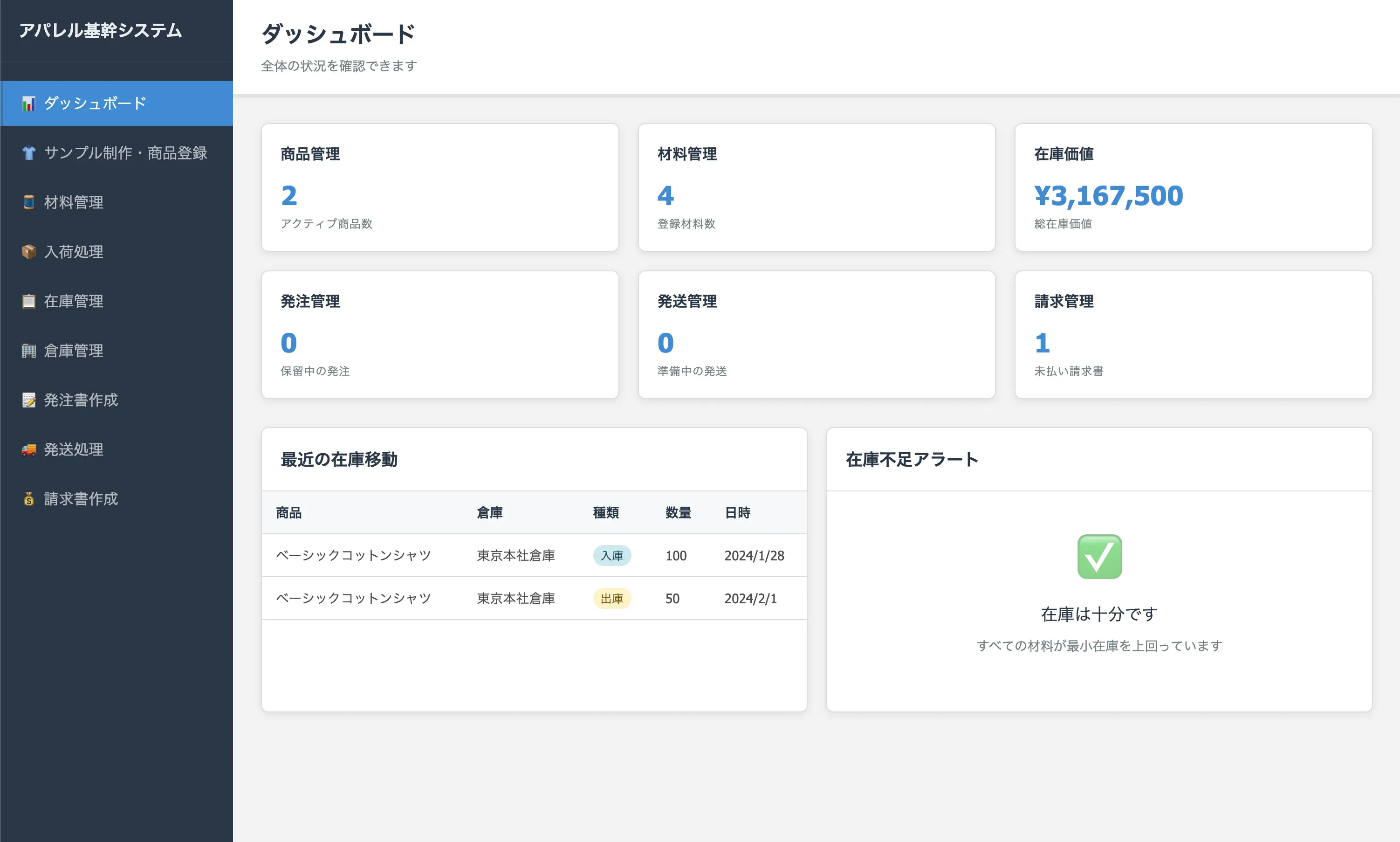
Years of operation left business knowledge spread across software and workplace practices. The engagement investigates existing assets to retain important rules during modernization.
Analysis covers data, processing logic, screens, reports, and permissions. Design, implementation, and reviews are progressing around products, materials, users, and roles alongside migration and architecture planning.
Client identity and engagement-specific figures are withheld. Post-launch time savings or inventory improvements are not yet presented as outcomes.
07 / CORE SYSTEMS
Engineers work directly with your staff and use regular reviews to align workflows and interfaces. New requirements are assessed for priority, schedule, and cost before the plan changes.
We interview stakeholders and inspect systems and data to clarify scope and priority issues.
We design workflows, data, interfaces, permissions, integrations, migration, and non-functional requirements, then sequence delivery.
Priority domains are implemented and reviewed with real data. Automated tests also check the impact of changes.
We migrate and validate data, train users, and establish monitoring, support, and continuous improvement.
Timing depends on scope, discovery complexity, migration, and review availability. Deliverables and responsibilities are made explicit in the proposal.
08 / CORE SYSTEMS

We define the scope around your workflows and operational requirements.
Maintain agreed business rules, design materials, key workflow test results, migration steps, and user and operations guides. Record exceptions and outstanding issues so future decisions have a clear basis.
Review role-based permissions, operation logs, environment separation, monitoring, and backups. Agree retention, recovery checks, escalation contacts, and response scope.
Define responsibility for defects, infrastructure, user questions, and new features. Prioritize accumulated requests and assess cost before the next development stage.
09 / CORE SYSTEMS
Initial costs cover discovery, design, development, integrations, migration, and training. Ongoing costs separate infrastructure, maintenance, and improvements. Screen counts alone cannot capture business rules or data quality.
Covered domains such as sales, inventory, and production, plus the rules within them.
Record counts, formats, duplicates, gaps, encoding, matching, and transformations.
Roles, viewing boundaries, approval stages, delegates, rejections, and exceptions.
APIs, files, accounting, commerce, devices, and synchronization frequency.
Users, data volume, response targets, allowable downtime, and log retention.
Parallel running, training, launch support, inquiries, improvements, and infrastructure.
The first conversation clarifies your current state and priorities. Where discovery is needed, we propose it with an explicit scope and defined outputs.
10 / CORE SYSTEMS

We define the scope around your workflows and operational requirements.
If documentation is scarce or scope is unclear, begin with discovery. Define outputs covering workflows, data, interfaces, and implementation priorities.
Select an area such as products or inventory, investigate its connections, and introduce it in stages. Separate the initial scope from future expansion while establishing an appropriate foundation.
Map dependencies, master data ownership, migration, parallel running, and internal acceptance. Plan the whole system and individual releases with explicit decision points.
11 / CORE SYSTEMS
Yes. We can investigate the application, database, reports, and workplace practices. After reviewing available access and materials, we propose the discovery scope, deliverables, and cost.
We support migration from Excel, Access, and third-party systems. We help plan the entire migration process.
We assess impact and priority, then incorporate changes through regular reviews after agreeing on schedule and cost implications.
Sales, inventory, CRM, invoicing/accounting integration, workflows — we cover core business operations end to end.
Absolutely. We recommend starting with the biggest pain point and expanding systematically.
Cost depends on business scope, user count, the state and volume of existing data, integrations, permission and approval complexity, and support scope. We document assumptions and scope after discovery before estimating.
No. Stable functions and external services can remain while priority workflows are modernized. Data ownership and responsibility between systems need to be clear.
Yes. We agree separate scope for user questions, defects, infrastructure, backups, and further development, including support hours and ownership.
Explore our columns on business systems and our blog on development and AI.
Business system columns →Business systems organize operational data; AI helps people use it. We can scope their roles and any necessary integration together.
Explore private AI →LET’S TALK
Tell us what is difficult today and what you want to make possible. We can start by clarifying the scope, constraints, and practical next steps together.
Enquiry → review and reply → discovery conversation → proposed next steps. Research and development costs are proposed after clarifying the scope.