
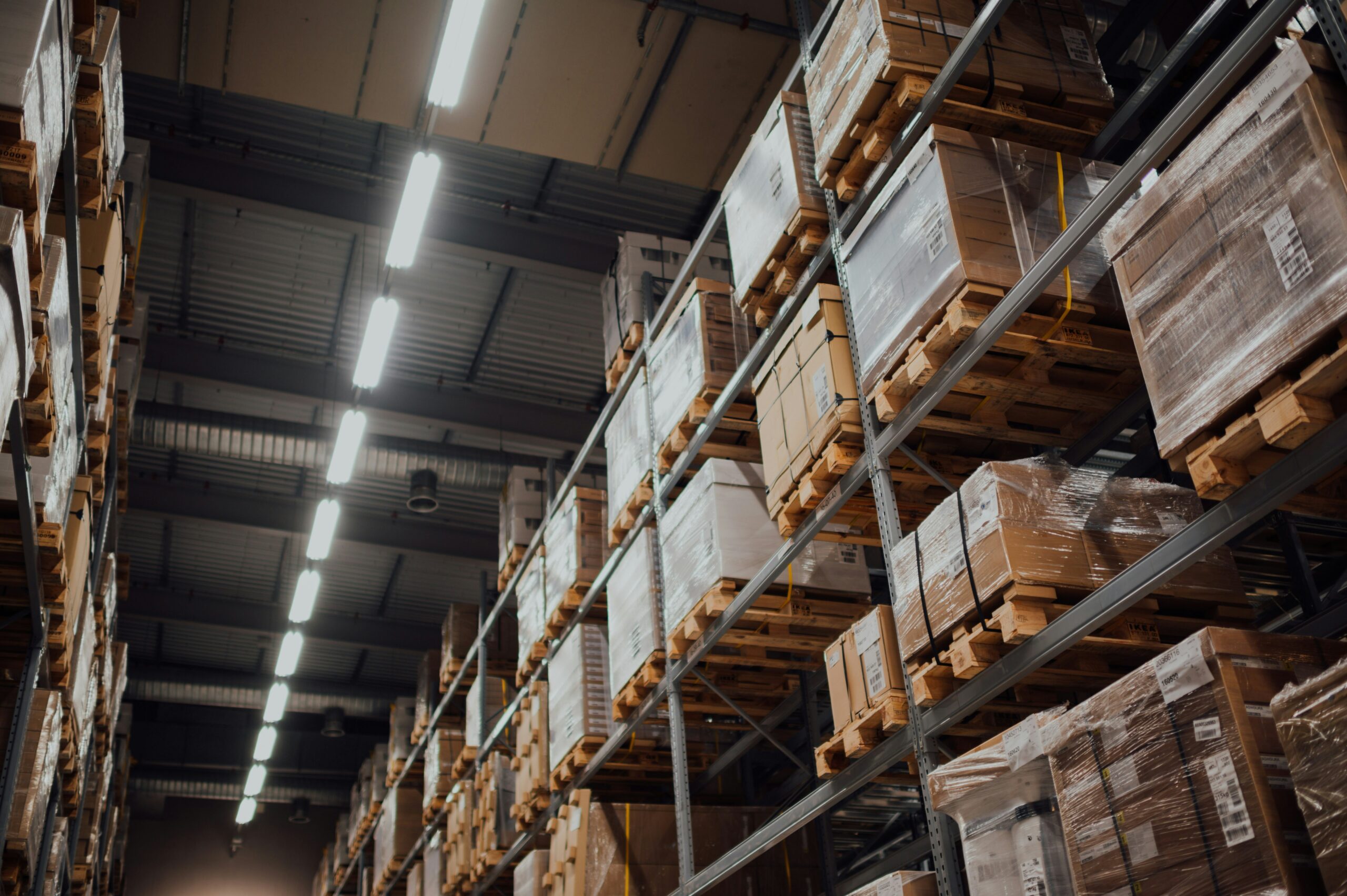
If you work in manufacturing, sales management, or inventory control,
"This is next-day warehousing."
"Please process this as next-day warehousing."
"Whatever isn't shipped today becomes next-day warehousing."
you'll sometimes hear phrases like these.
If you've just started working in manufacturing,
"What's next-day warehousing?"
you might find yourself wondering.
To begin with, "warehousing" itself isn't a term you'd use in everyday life.
This article explains **"next-day warehousing"**, a term used in manufacturing and inventory management, in a way that's easy for beginners to follow.
Note that the meaning and handling of "next-day warehousing" can vary by company and industry.
This article focuses mainly on the basic concept.
First, What Is "Warehousing"?
Before we look at next-day warehousing, let's first consider what "warehousing" means.
Put simply, warehousing means
putting goods or products into a warehouse and managing them as inventory
— that's all it is.
For example, say a factory manufactures 100 units of Product A.
Right after they're made, the units might still be sitting on the factory floor.
製品Aを100個製造
↓
製造現場にある
After that, the finished products are moved to the warehouse.
製品Aを100個製造
↓
倉庫へ移動
↓
在庫として管理
Moving products like this into the warehouse is what's sometimes called "warehousing."
Depending on the company,
"storing in"
"putting into stock"
"stock-in"
or other terms entirely may be used instead.
So What Is Next-Day Warehousing?
As the name suggests, next-day warehousing means
warehousing goods or products on the following day
— exactly that.
For example, say 100 units of Product A are manufactured on July 15.
But they aren't moved into the warehouse that same day.
7月15日

製品Aを100個製造
↓
製造現場などで保管
They're moved into the warehouse the next day, July 16.
7月16日

製品Aを倉庫へ移動
↓
蔵入れ
↓
在庫として管理
This kind of process is what's sometimes called "next-day warehousing."
Put simply, it comes down to the idea that
"today it isn't warehoused — it goes into inventory the next day instead"
— that's essentially it.
Why Warehouse It the Next Day?
"If it's finished, why not just put it straight into the warehouse the same day?"
you might wonder.
But in manufacturing, the physical movement of goods and the timing of administrative processing don't always line up.
For example,
- Warehouse operations for the day have already ended
- The products still need to be checked or inspected
- Processing for the day has already been closed out
- There's a business rule that treats it as next-day inventory
- It's processed the next day to line up with shipping schedules
These are just some of the reasons; there are many others.
For example, say a product is completed in the evening.
17:00 製品完成
↓
倉庫の当日処理は終了
↓
翌朝に倉庫へ移動
↓
蔵入れ
In cases like this, the warehousing process may end up happening the next day.
Having the Goods on Hand Isn't the Same as Being Able to Use Them as Inventory
One important point for understanding next-day warehousing is that
the physical existence of the goods and their availability as usable inventory are not necessarily the same thing
.
For example, say 100 units of Product A have been completed at the factory.
Physically, there are 100 units of the product.
But if they haven't been warehoused yet, the system might not treat them as shippable inventory.
実際にある製品:100個

蔵入れ済:0個
出荷可能在庫:0個
Once they're warehoused the next day,
実際にある製品:100個

蔵入れ済:100個
出荷可能在庫:100個
the numbers look like this.
In other words, the products themselves have existed since the previous day.
What changes is
that they move into a state where they can be managed and used as inventory
.
This is an important concept for understanding inventory management in manufacturing.
What's the Difference Between Next-Day Warehousing and Stock-In?
"Isn't that the same as stock-in?"
some people might wonder.
In practice, the meanings can indeed be very close.
Stock-in generally refers to
bringing goods or materials into the warehouse
.
Warehousing, too, is sometimes used to mean bringing goods or products into the warehouse.
So depending on the company,
蔵入れ
=
入庫
the two are used with essentially the same meaning.
On the other hand, as a company-specific business rule,
"stock-in" and "warehousing" are sometimes treated as separate processes.
For example,
製品完成
↓
入庫
↓
検品
↓
蔵入れ
↓
販売可能在庫
the workflow might look like this.
In this case, stock-in and warehousing are distinct processes.
That's why
"what actually changes in the inventory when warehousing happens?"
is the key question to check.
For Next-Day Warehousing, the "Date" Matters
As the name suggests, next-day warehousing centers on the date being "the next day."
For example, say a product completed on July 15 is warehoused on July 16.
製造日:7月15日
蔵入日:7月16日
In this case,
when it was made
and
when it was warehoused as inventory
are two different dates.
In the system, this difference in dates can matter a great deal.
For example, it can affect:
- Daily production results
- Daily inventory quantities
- Determining shippable dates
- Month-end inventory
- Inventory history
and other such records.
Month-end in particular requires care.
7月31日 製品完成
↓
8月1日 蔵入れ
Should this product be counted as inventory as of July 31, or as of August 1?
This can differ depending on a company's inventory management and accounting rules.
Even though it might look like a simple "move to the warehouse," how the date is handled really matters.
What Should You Check When It Comes to Next-Day Warehousing?
If you're new to manufacturing, or you work with manufacturing systems, and you come across the term "next-day warehousing," checking the following points will make it easier to understand.
First,
"what exactly is being warehoused?"
.
The meaning changes depending on whether it's a finished product, a semi-finished item, or a returned product.
Next,
"where is the product before it's warehoused?"
is worth checking.
Is it on the factory floor, in a temporary storage area, or already physically sitting in the warehouse?
And most important of all,
"what actually changes in the system once it's warehoused?"
.
For example,
在庫数量が増える
might be one thing that happens.
Or perhaps
在庫は存在する
↓
蔵入れ
↓
出荷可能になる
it's more a matter of this kind of process.
Rather than just memorizing the phrase "next-day warehousing," it's important to look at what actually changes before and after the warehousing step.
"Next-Day Warehousing" Can Mean Something Different at Each Company
One thing worth keeping in mind is that "next-day warehousing" doesn't necessarily mean the same thing at every manufacturing company.
Depending on the company,
physically moving the goods into the warehouse the next day
might be what it refers to.
At another company,
recording the inventory with the next day's date
might be what it refers to.
Or again,
processing a product that wasn't handled the same day as next-day inventory instead
might be what's called "next-day warehousing."
So on the ground, at any given company,
"specifically, what does next-day warehousing involve doing?"
"what changes about the inventory once next-day warehousing happens?"
are the questions worth asking directly — that's the surest way to find out.
Summary
At its core, next-day warehousing is
warehousing goods or products the next day and managing them as inventory
.
For example:
7月15日 製品完成
↓
当日は蔵入れしない
↓
7月16日 蔵入れ
↓
在庫として管理
That's the general flow.
The key to understanding next-day warehousing is that
"the moment the product actually exists" and "the moment it's managed as inventory" aren't necessarily the same
.
In a nutshell,
next-day warehousing = the process of putting something into the warehouse/inventory the next day
— thinking of it that way should make it easy to grasp.
That said, the specific meaning of "warehousing" or "next-day warehousing" can vary from company to company.
If this term comes up on the ground at your workplace,
"what state is it in before warehousing?"
"what changes once it's warehoused?"
try asking these questions.
Doing so will make it much easier to see what "next-day warehousing" means at that particular company.