
This is a write-up of episode 16 of the podcast, released every Monday. This episode is a full recap of exhibiting for the first time at Startup Japan Expo (April 15-16). I go through everything — preparation, what happened on the day, the story behind collecting 61 business cards, and what to improve for next time.
The Four Services We Exhibited
We exhibited the following four services this time.
- On-premises AI deployment service
- Multiplayer VR (LBE)
- AR furniture viewer
- Core business system, Anchor
We set up a demo environment for each. For the LBE service we only had one VR headset, so we couldn't set up a hands-on demo for visitors, but for the other three, we displayed them in a form visitors could actually try out themselves.
What We Prepared
The Poster (A0 Size)
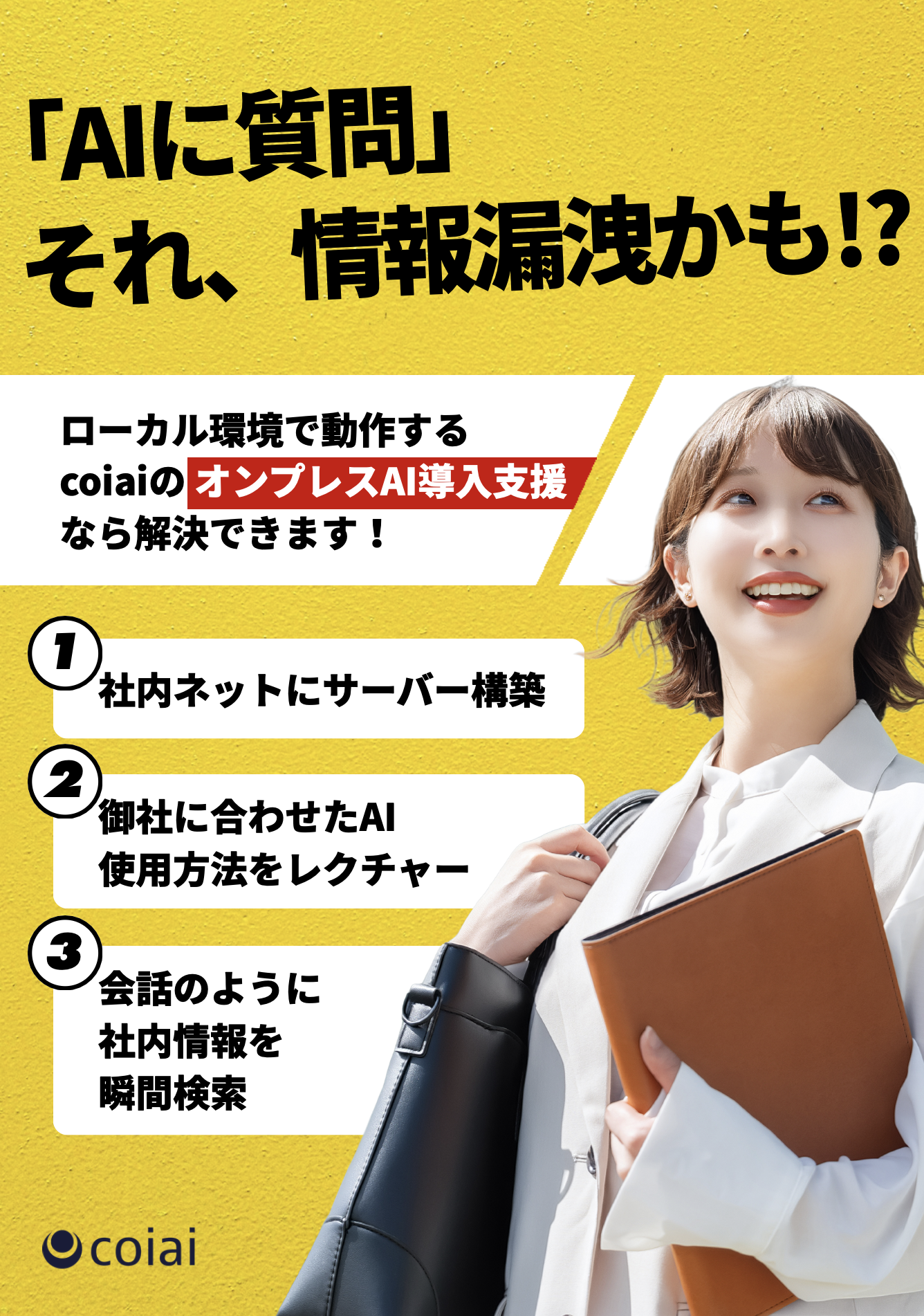
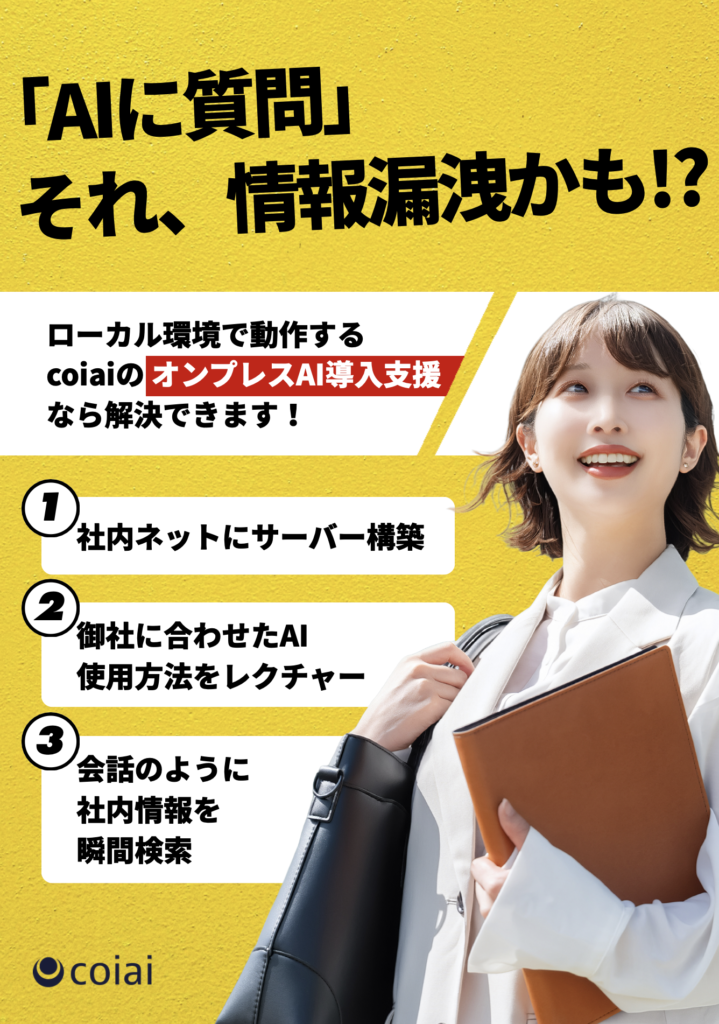
We kept in mind the classic marketing principle of the 3 B's (Beauty, Beast, Baby). We placed a large image of a Japanese woman in a business suit front and center — a deliberately eye-catching design.
We cut the text way down. No more than 15 characters per line, with a font size big enough to fill the whole sheet. People read the biggest font first, so on an A0 poster, what matters more than detailed explanation is making people think, at a glance, "what is that?"
Flyers (Four A4 Versions)
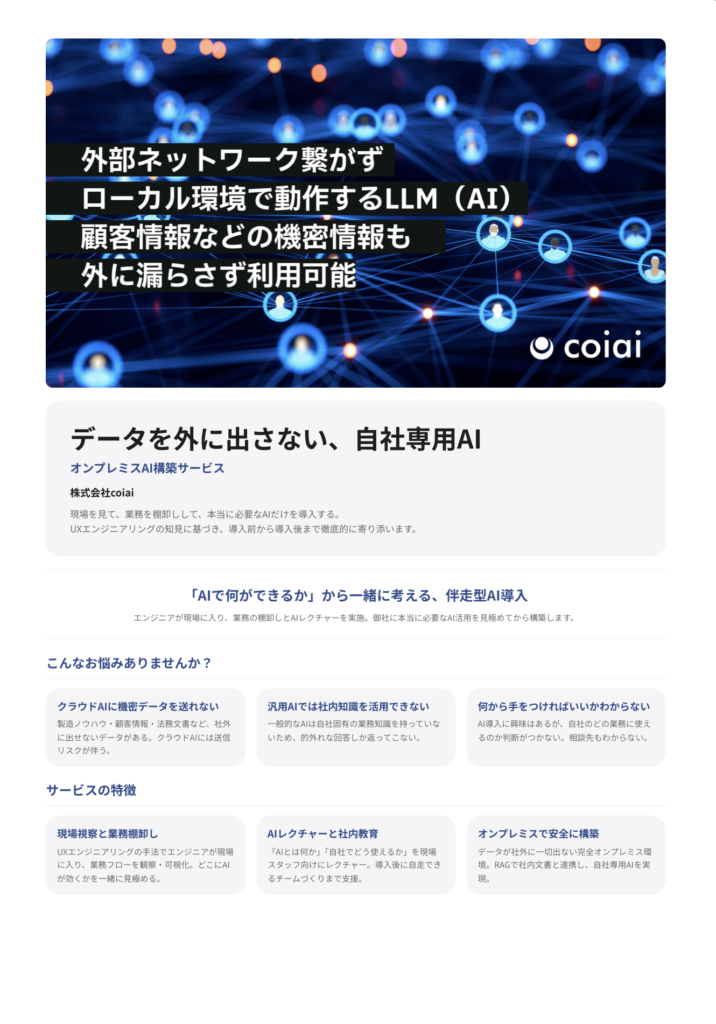
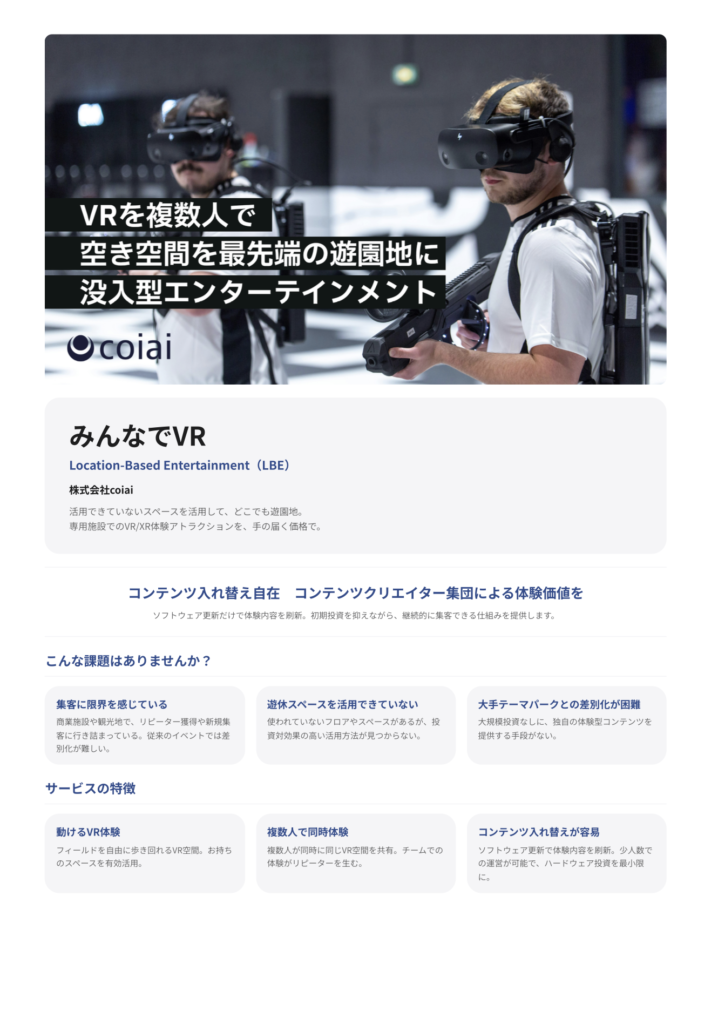
We made one flyer each for the four services — on-premises AI, LBE, the AR furniture app, and the core business system Anchor. These were built using the design guidelines and Claude Code approach I talked about in an earlier episode. Since we had a template, the structure stayed consistent across all four: concise delivery of exactly what customers want to know, with a clear path pointing them to "ask us directly for details."
Detailed Explanation Materials (About 50 Pages)
We prepared two copies in clear document folders — one for explaining things at the booth, and one to send by email afterward.
What we made a point of prioritizing here was not slipping into an engineer's point of view. If you're not careful, it turns into writing like "we use this kind of mechanism," so we made sure to write about "what benefit does this actually bring" from the user's perspective, so it lands with executives and IT department staff. Honestly, we haven't fully nailed this yet, and it's a point we want to keep improving.
If you'd like to see the materials, please reach out through our contact form.
Business Cards
We prepared business cards with a photo of our face on them, and the back packed with details of our services. The idea is that once you hand one over, it's immediately clear "whose card this is, and what kind of company it is."
I do have a certain admiration for simple, cool-looking business cards, but that's really only an option once you've built up name recognition. For now, just like with the poster, we're prioritizing being unashamedly eye-catching.
Since this was a Sansan-run trade show, exchanging cards through Eight was essentially mandatory. Using the NFC cards Sansan was handing out at their booth, we could exchange business cards just by tapping a phone against it, which was smooth and worked well.
If you want to see my business card, I'll hand you one when we meet (laughs).
The Demo Lineup — the On-Premises AI Was the Real Star
The biggest response by far came from the on-premises AI demo.
We used a mini PC equipped with an AI-focused GPU, borrowed from a friend. On this mini PC, we ran an LLM interface I built entirely from scratch. The LLM itself is an open-source model, but the interface and the RAG vectorization layer are our own original work.
The key point was letting people experience for themselves that "AI is running inside this tiny box, with no internet connection at all." We even put up a sign designed so visitors could visually confirm it wasn't connected to the internet.
The internet connection at Makuhari Messe was quite congested and unstable, but since on-premises AI runs without needing a network connection at all, this ended up giving us a real advantage. Always make sure your demo can run fully offline — that was one of the biggest lessons from this show.
What to Bring When Setting Up a Booth
- A USB desk light — a brighter booth reliably draws more people
- Extension cords — plan on running out of outlets
- Removable adhesive tape — for putting the A0 poster up on the wall
- Scissors and a ballpoint pen — unglamorous but essential; also useful for taking notes
- A flyer stand
- Acrylic signage
It's the same mindset as bringing duct tape, masking tape, and protective tape to a job site. A trade show is a job site too, so all of these end up being essential.
Tricks for Stopping People at the Booth
Having several different phrases prepared for calling out to people matters a lot.
Ranked by how well they worked, based on what we tried this time:
- "AI you can use with no internet connection" — stopped the most people in their tracks
- "AI that runs locally" — also got a good response
- "On-premises AI" — stopped the fewest people
"On-premises" only lands with engineers. For an average business person, "doesn't connect to the internet" is far more intuitive.
For people who didn't respond to the AI pitch, switching to "we also do AR and VR" often got them to turn around and pay attention.
This time, a friend from high school who works as a booth companion helped us out, and just counting visitors who came to our booth over the two days, we had over 70 people. Having a professional at drawing people in makes an enormous difference to foot traffic.
How We Talked — a Dramatic Shift on Day 2 Thanks to Some Coaching
There was a huge difference in how much we improved between day one and day two.
On day two, a senior friend of mine with a background in sales (the very person who was actually the reason I started this podcast) coached me directly. What he taught me:
- Ask the other person questions — what's their job, what work do they actually do, what's missing for them. You can't sell anything if you don't understand their situation.
- Talk with a clear goal in mind — closing a sale on the spot at a trade show is hard. The real goal is "getting a chance to talk further" — connecting to the next step. Concretely, that means asking things like "what days do you have free?" to actually go after a meeting.
On the day I got this coaching, day two, we actually landed a real sales meeting. It made a completely different world of difference.
The Business Card Results
Results across the two days:
| Type | Count |
|---|---|
| Digital business cards (Eight) | 38 |
| Paper business cards | 23 |
| Total | 61 |
We noted the following on each card:
- What to send them afterward
- Which service they were interested in
- Urgency (classified A, B, or C)
Visitors came from a wide range of industries — ad agencies, venture capital, translation companies, manufacturing, major telecom companies. A VC even brought up the idea of investment. It made me realize a trade show can be a place for fundraising, not just sales — though our company plans to keep moving forward on our own capital for the time being.
Follow-Up After Getting Back
Since Makuhari is far from home, we stayed at a hotel, and started sending follow-up emails the morning after we got home.
- A thank-you email for each card, recalling exactly what we'd discussed with that person at the show
- Sent materials to anyone who'd asked for them
- Shared meeting schedules
As a result, we already have 3 sales meetings confirmed. Out of every sales activity we've tried so far, the trade show was overwhelmingly the most effective. I'd be thrilled if even one of these turns into actual work.
What to Improve Next Time
Prepare a Placard
We should have prepared a simple placard, on paper roughly A3-sized, that made our services clear at a glance. We didn't have enough of a hook to catch the eyes of people just walking past the booth.
Flyer Quantities
We brought 100 copies of each service's flyer, but for our main product, 200 would have been better. 100 wasn't nearly enough. You can hand out as many flyers as you bring.
Doing Role-Play Practice
Not having done any role-play practice for our pitch was a real regret. And even beyond that, if we had done role-play, the goal wasn't clearly defined to begin with. We should have practiced with a specific target in mind — "explain concisely and turn it into a sales meeting." Having gone through this show, I now know exactly what target to set, so we'll definitely do this next time.
Summary
The thing I felt most from exhibiting at a trade show was the value of getting real-time feedback face to face.
Compared to cold calling or email outreach, people who come to a trade show are there with some kind of purpose in mind, so it's overwhelmingly easier to talk to them. You can watch their expression change in real time and learn directly how your product is actually being received.
Out of every sales activity we've done so far, the trade show was, by a wide margin, the best.
Closing
coiai Inc. works on web development, XR development, core business system development, and on-premises AI adoption support.
UX design is a particular strength of ours. We're good at delivering software with a genuinely usable design, so if you don't want to end up with a hard-to-use system, please leave it to us.
Even for projects other companies turned down, or cases where the quote felt too high, there are sometimes ways to make it work by changing the approach. Quotes are always free, so please feel free to reach out.